
Notarized Translation Services
Certified + Notary Seal
When Institutions Require Notarization

Overview
Certification Plus a Notary's Seal
A notarized translation is a certified translation with a notary public's seal and signature added on top of the translator's certification statement. USCIS doesn't require it, but some state agencies, academic institutions, and foreign governments do — and we add it on demand without slowing down delivery.

Process
How Notarized Translation Works
- 01
Submit
Upload your document securely, or send it to your point of contact.
- 02
AI Draft
Enterprise-grade AI produces a legal-grade first-pass translation.
- 03
Human Certification
A qualified linguist edits for accuracy and signs a Certificate of Accuracy.
- 04
Notarization & Delivery
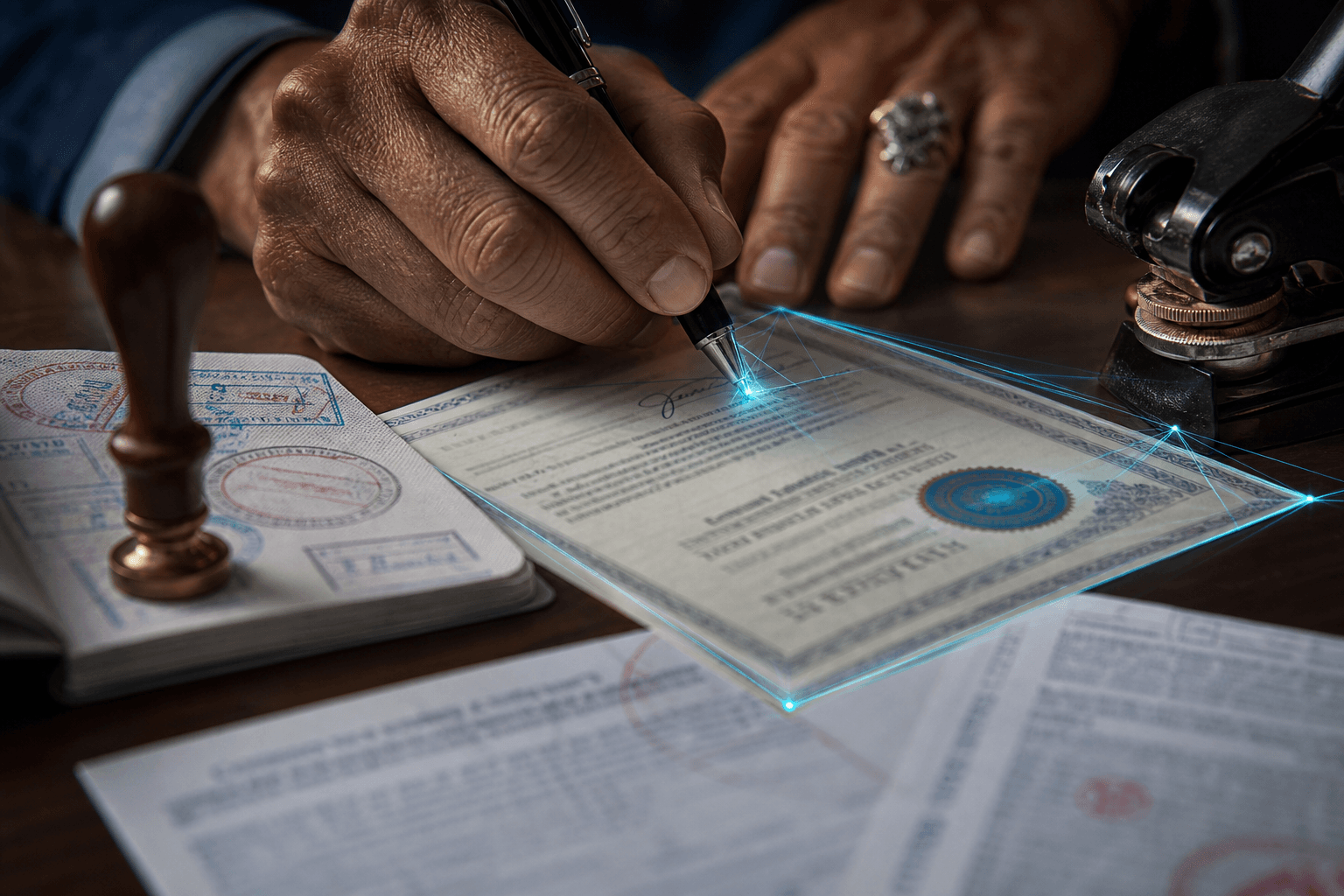
A notary public witnesses the translator's signature and adds their seal before you receive the filing-ready PDF.
When You Need It
When You Need Notarization
Notarization adds a layer of formal witnessing on top of certification. It doesn't make a translation more accurate, but some institutions require it by policy.
Frequently Asked Questions About Notarized Translation
No. USCIS accepts standard certified translation without notarization. We add notarization when a specific institution, attorney, or jurisdiction requests it.
Certified translation includes a signed accuracy statement from the translator. Notarized translation adds a notary public's seal witnessing that signature.
No. Notarization verifies the translator's identity and signature, not the quality of the translation. Accuracy comes from the human certification step.
Rush delivery is available in 1–2 hours for most documents, with notarization included in that timeline.