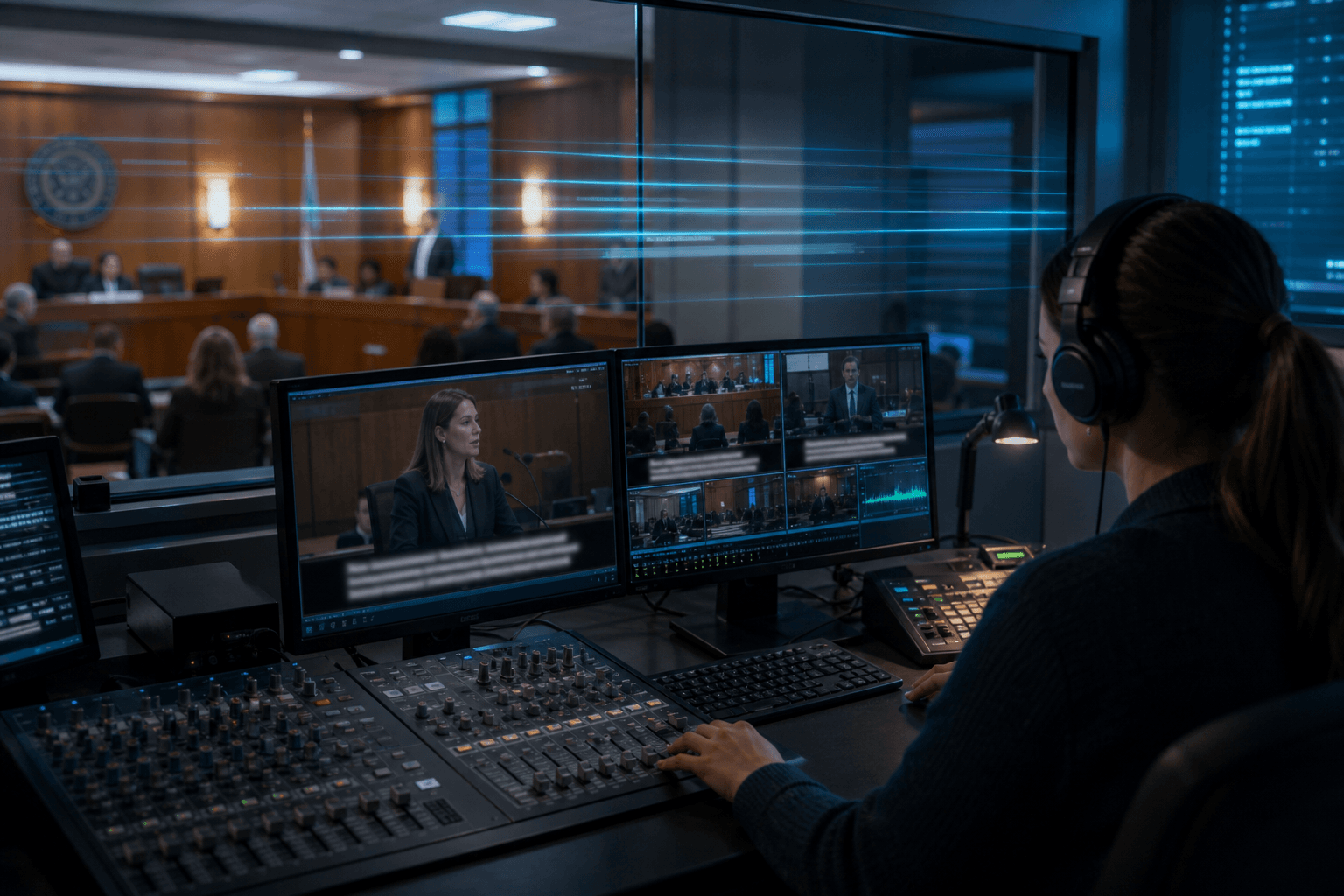
AI Legal Captioning Services
Accurate captions for hearings, depositions, recorded meetings, and evidentiary video.
Timestamped, Speaker-Identified, Human-Verified

Overview
Captions Built for the Legal Record
Translate.Law's AI captioning produces timestamped, speaker-identified captions formatted for legal use. Not consumer-grade auto-captions. A human reviewer can verify the caption file for the record when accuracy is critical, such as for hearings or evidentiary video.
Captioning is priced per audio minute or per hour, and runs through the same secure process as every other Translate.Law service.
Process
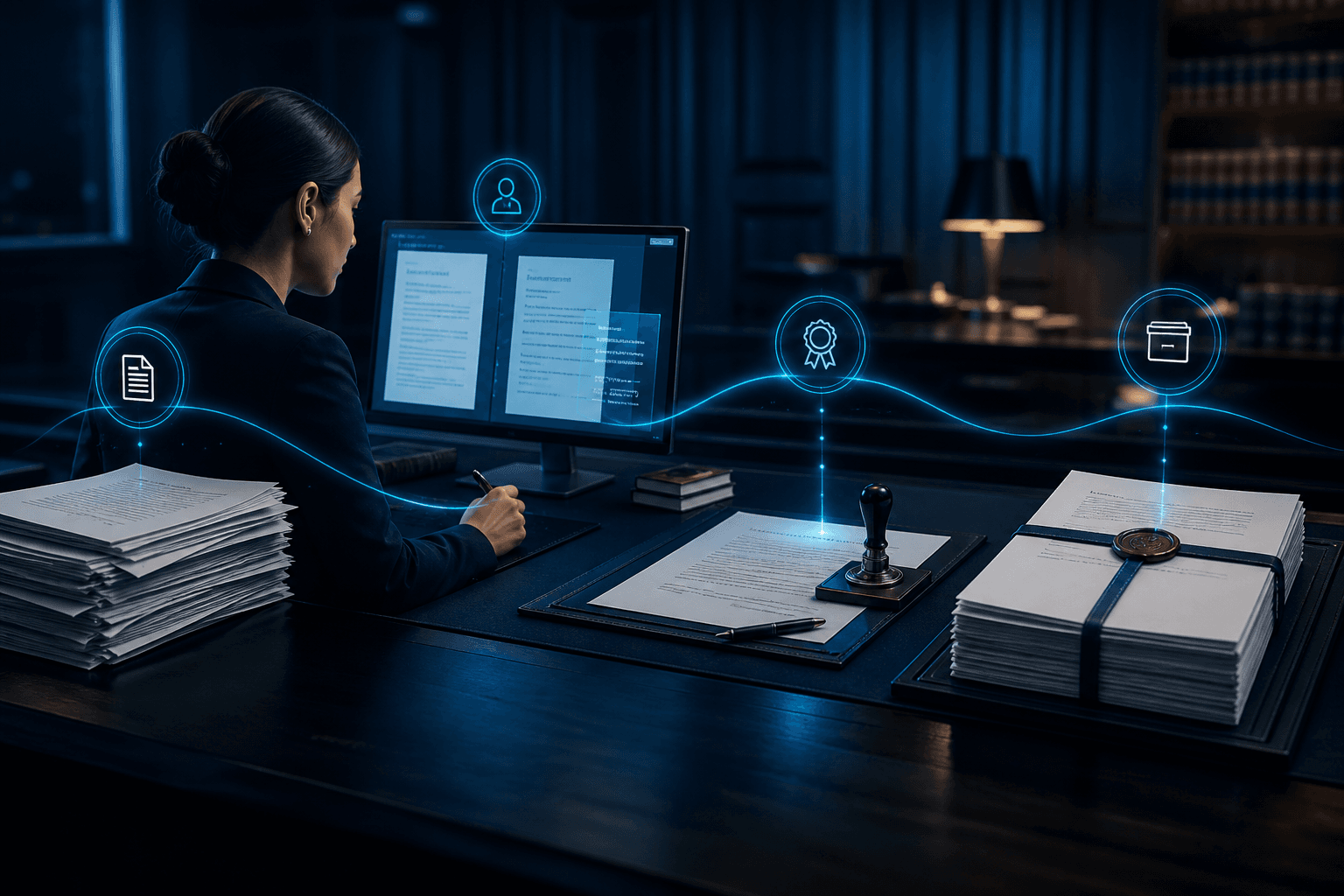
How Legal Captioning Works
- 01
Submit
Upload your recording or provide a live feed securely or send it to one of our account managers.
- 02
AI Captioning
Closed-system AI generates timestamped captions with speaker labels.
- 03
Human Verification
A qualified reviewer checks captions for the record when accuracy is critical.
- 04
Delivery
You receive a captioned file or caption transcript ready for filing or playback.
Use Cases
Captioning by Use Case

ExploreOur Services
Frequently Asked Questions About Legal Captioning
Legal captioning converts spoken audio into timestamped, speaker-identified text displayed alongside or over video. Used for hearings, depositions, and evidentiary recordings.
Captioning is timed to a video or live feed and displayed on screen. Transcription is a standalone written record of the audio, without timing to a video display.
Yes, when verified by a human reviewer. Translate.Law's captions can be checked against the source recording for accuracy before they're used as part of the record.
Yes. Multilingual captioning supports real-time, CART-style captioning for live proceedings in addition to post-production captioning for recorded video.